

You can earn backlinks without a personal network. A backlink is a link from one website to a page on another, and you can attract one by publishing useful resources, finding relevant directories, and pitching content to sites that already cover your topic. Learning how to get backlinks when you have no connections starts with giving publishers a clear reason to link.
It can seem as though every opportunity depends on knowing the right people. It doesn’t. Strong link prospects value relevance and usefulness, so start with competitor backlink analysis and content that fills a genuine information gap. This guide explains how to find link opportunities, assess directories and niche listings, create link-worthy resources, and pitch expert roundups and curated resource lists. The result is a repeatable process for earning links through value, not insider access.
Key Takeaways
- Review competitors’ backlink sources to spot relevant websites and content formats worth pursuing.
- Use directories selectively, prioritizing niche relevance and genuine value over building links in bulk.
- Create useful original resources that give publishers a clear reason to cite your work.
- Find expert roundups and curated lists in your field, then pitch a focused contribution that serves their readers.
1. Competitor backlink analysis
Start with direct competitors that rank for the same topics and serve the same audience. Enter their domains into Ahrefs or another backlink analysis tool, then export referring pages, linked URLs, and anchor text. The aim isn’t to copy every link. It’s to identify relevant opportunities your site can pursue efficiently.
Look for patterns across competitors’ backlink profiles. If several earn links from the same industry directory, resource page, or publisher, add that source to your target list. Then inspect the page that earned each link. A detailed guide, original study, or useful template may explain why a publisher cited it. Create a stronger resource or a more suitable contribution before pitching.
Assess each prospect by subject relevance, trustworthiness, and real organic visitors. Domain Authority and Trust Flow can help sort prospects, but they shouldn’t decide your strategy. Prioritize pages that attract readers and cover your topic. A page with 500 or more organic monthly visitors can be a useful prospect to investigate, but check its audience and content fit. Editorial links within relevant body copy usually make more sense than site-wide footer links.
Which backlink tactics violate Google Search Essentials spam policies? Avoid automated bulk directory links, private blog networks, and paid placements presented as editorial endorsements. Repeated exact-match anchors and pages built solely to hold links are warning signs of manipulative link building.
What is the average cost of buying backlinks, and why is it risky? There’s no reliable universal average: placement, relevance, and publisher quality affect the cost. Paid dofollow links can be risky if they appear designed to manipulate rankings rather than help readers.
How long does it usually take to earn backlinks and see SEO results? Timing depends on publisher decisions, content usefulness, and how quickly search engines discover changes. Track new referring pages and rankings over time instead of expecting immediate results.
2. Can I replicate my competitors’ links from directories and niche listings?
Yes. Review competitors’ industry directories, professional associations, and niche listings, then submit accurate business details to relevant platforms. Choose listings with a genuine audience and clear editorial standards. A directory link can support visibility, but relevance and usefulness matter more than the number of listings.
Aim for a natural mix of link types. Dofollow links can pass ranking signals, while nofollow links can still help people discover your resource. Don’t reject a relevant mention just because it’s nofollow, and don’t chase a specific ratio. Focus on earning quality backlinks from pages that suit your audience.
Turn existing relationships into link opportunities. Ask suppliers, clients, or community partners about a useful testimonial, case study, or guest contribution. If a publisher mentions your business without linking, send a polite, specific note asking for a link so readers can find the referenced resource.
What are the best free ways to earn backlinks for a new website? Publish useful how-to guides, original lists, or infographics, then offer them to relevant publishers and organizations. You can also find broken links on resource pages and suggest a closely matched page from your site.
How do broken link building and resource page link building work? Find a broken link on a relevant page, identify what it helped readers find, and suggest your comparable resource as a replacement. For resource page outreach, explain how your page fits the list and benefits its audience.
A skyscraper campaign improves an existing resource by making it clearer, more complete, or easier to use. Then contact sites linking to the older page and explain the specific improvement. An infographic can make complex information easier to share, while a step-by-step guide can answer a focused reader need.
How can a local business earn backlinks from community organizations and local media? Offer a relevant local resource, expert perspective, or event information that serves their readers. Contact organizations and journalists with a concise pitch tied to their coverage, not a generic link request. A repeatable publishing workflow can help maintain useful resources; explore SEO content automation as one way to support that effort.
3. Creating link-worthy content and original research
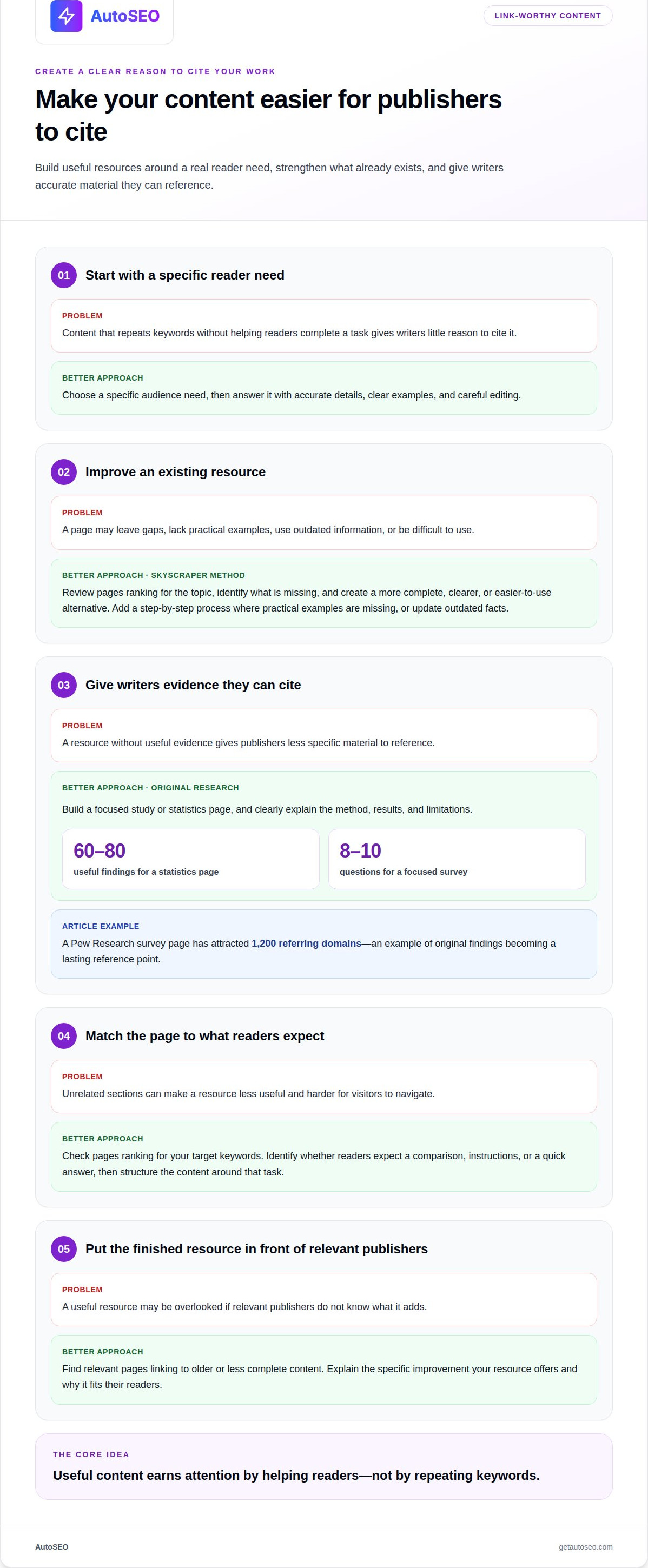
Publish a resource that gives another writer a clear reason to cite it. Useful options include expert guides, original data studies, calculators, templates, and well-organized statistics pages. Start with a specific audience need, then answer it with accurate details, clear examples, and careful editing. Strong linking assets earn visibility because they help readers complete a task, not because they repeat keywords.
Use the skyscraper approach to improve an existing resource. Review pages ranking for a target topic, note gaps in their coverage, then create a more complete and easier-to-use alternative. If current guides lack practical examples, add a step-by-step process. If they rely on outdated information, update the facts. A better format can make your resource easier for publishers to recommend.
Original research gives outreach a specific reason to begin. Build a statistics page around 60–80 useful findings, or run a focused survey with 8–10 questions. Present the method, results, and limitations clearly so writers can cite the data accurately. A Pew Research survey page has attracted 1,200 referring domains, showing how original findings can become a lasting reference point.
Match search intent before expanding a draft. Check the pages ranking for your target keywords and identify what readers expect: a comparison, instructions, or a quick answer. Structure your content around that task. Unrelated sections rarely make a resource more useful. Precision helps visitors find answers faster and gives other sites a focused page to reference.
Promote the finished resource. Find relevant pages linking to older or less complete content, then explain what your version adds. Keep each outreach message specific: name the page, identify the gap, and suggest your resource as an alternative. Content syndication can extend visibility when you adapt material for another publication and direct interested readers to the original. Links don’t appear automatically, so make promotion part of creating the resource.
4. Expert roundups and curated link lists
Expert roundups and curated resource lists can earn links by organizing useful answers for readers. A roundup might ask specialists to explain an industry challenge, then bring their insights together. A curated list might collect trusted guides, tools, or research for a specific audience. Your contribution should serve the page’s purpose, not simply add your business name.
To find websites accepting guest posts or expert contributions, search your topic alongside phrases such as “guest article,” “expert interview,” or “resources.” Review the results for recent interviews, contributor guidelines, and resource pages. An industry website that regularly publishes interviews is a stronger prospect than a site with no clear editorial activity. Build a focused list of 30 target sites, then prioritize the best audience and subject fit.
Assess each curated page before pitching. Check whether its links lead to useful, relevant resources and whether the page gives readers a reason to return. A list packed with unrelated links offers little value. Find a gap your guide, data study, or practical template fills, then explain that fit directly to the editor.
Make your pitch easy to act on. Name the specific roundup or resource page, suggest a relevant contribution, and explain what readers will learn. For example, offer a concise expert perspective on a current industry problem, supported by a practical recommendation. If accepted, provide a short author description and the exact destination you want linked. Keep the link relevant and place it naturally in the published content.
Consistent link building comes from useful contributions, not mass submissions. Track which websites publish your work, the topics they cover, and the resources their readers need next. That record helps you make more relevant pitches over time. To keep useful content moving through your SEO workflow, automate your SEO publishing.
AutoSEO: Automated SEO Platform Subscription
AutoSEO helps turn consistent publishing and backlink building into a repeatable SEO workflow. Its Automated SEO Platform Subscription generates and publishes 30 SEO-optimized articles per month and builds backlinks, supporting businesses that need ongoing content and link acquisition without managing every task manually.
This approach suits businesses ready to publish consistently and build organic visibility. It doesn’t replace the judgment needed to choose relevant topics or assess whether a link serves readers. Instead, AutoSEO automates core SEO activity with one expert article published daily, giving you more time to review your strategy and the content that represents your business.
If you want an automated system to support ongoing SEO, visit AutoSEO to explore the platform.
Turn Your First Links Into Lasting Momentum
Make link building part of your regular publishing workflow, not a one-off effort. Set a clear goal for each new resource, record whom you contacted, and note which pages attract genuine interest. This record helps you refine your outreach and focus on what publishers and readers respond to.
As you build this routine, prioritize useful content and relevant placements over link volume. Review the pages that attract attention, then use those signals to shape what you publish next. This feedback loop helps you keep improving your approach to how to get backlinks when you have no connections.
If you want ongoing SEO activity supported by automation, explore AutoSEO’s Automated SEO Platform Subscription. Keep publishing, keep learning from each result, and build a link profile that reflects real value.
Frequently Asked Questions
What is a Backlink?
A backlink is a clickable link on one website that leads to a page on another. For example, a trade association’s article might link to a member’s guide to choosing accounting software. The linked page gives readers a path to more information, while the publisher offers a useful next step. The surrounding sentence explains why that destination is relevant.
Can I replicate my competitors’ links from directories and niche listings?
Yes, if a directory accepts your business and suits your field. Check the listing’s audience, submission rules, and category before adding your details. For example, a local accountant could consider a professional association directory, while a software company might look for a relevant product category. Keep your business name and profile details consistent, and skip listings that exist only to sell placements.
Quality vs Quantity: How Many Links Do You Actually Need?
There’s no fixed number that suits every site. Set link goals by comparing the pages you want to rank with their search competitors, then identify relevant referring sites that could strengthen those pages. A new product guide may need a different approach from an established homepage. Track referring domains, organic visits, and rankings together instead of treating link count as the only measure.
How can a new website get backlinks without existing connections?
A new website can earn links by publishing a resource that answers a specific question and introducing it to relevant publishers. For example, a gardening site could create a planting calendar for its local climate and offer it to community groups. To learn how to get backlinks when you have no connections, start with useful resources and targeted outreach, not mass messages.
How do you write a backlink outreach email that gets responses?
Write a short, personalized email that identifies the exact page, explains the fit, and makes one clear request. For example: “Your guide to onboarding links to an older checklist. I’ve published an updated checklist covering remote teams, which may help your readers. Would you consider reviewing it as a replacement?” Keep a digital PR pitch under 80 words, and avoid generic praise or demanding language.
How can original research, data, or free tools attract backlinks?
Give publishers something they can cite or use directly. A small-business survey, industry benchmark, or calculator that estimates project materials can answer recurring reader questions. Explain how you gathered the data, note any limitations, and make the findings easy to reference. Keep the tool accessible and update the page as inputs or industry conditions change, so it remains useful as a source.


