

Visibility is the first step to putting commercial properties in front of the right searchers. SEO for commercial real estate helps listing and market pages appear for relevant searches by aligning their content, location details, and authority with what people are looking for. Clear, useful pages also help search engines understand what each page offers.
A listing page and a market page serve different needs. Investors may compare property details, while tenants or buyers may research a location before they are ready to act. A focused search strategy connects each need to a useful, specific page instead of relying on broad keywords alone.
This guide covers the fundamentals, then explains how to optimize property listings and market pages, strengthen local citations, and build relevant backlinks. These elements work together to improve search visibility and attract qualified organic traffic.
Key Takeaways
- Match transactional, informational, local, and industry-specific keywords to the intent behind each search.
- Give property listings useful, original details, and build market pages around the local factors investors and tenants evaluate.
- Keep business citations consistent and earn relevant backlinks through credible market insight and expertise.
- Treat SEO as ongoing work: clear site structure, fresh content, and technical performance support long-term organic visibility.
What Is SEO in Real Estate?
SEO helps search engines match commercial property pages with relevant searches. It combines keyword targeting, useful content, and site structure to improve visibility in search results.
Commercial Real Estate Keyword Types
Commercial real estate keywords can signal whether someone wants a property, market information, or local expertise. Transactional terms, such as “multifamily properties for sale in a ZIP code,” show intent to explore or act. Informational searches seek guidance, while local phrases name a city, neighborhood, or ZIP code. Industry-specific terms identify property types, lease needs, or investor criteria, helping each page reach a more relevant audience.
Keyword Placement in Search Content
Keyword placement connects a page’s subject with the phrases people use in search engines. Put the main topic in the title, then use related terms naturally in the content and meta description. For example, a page about Atlanta warehouse leasing can address the location, property type, and leasing intent. Give each page a distinct focus so visitors and search engines can understand its purpose without repeated keyword use.
Niche and Long-Tail Keyword Research
Niche and long-tail keyword research uncovers specific phrases that reflect a commercial real estate audience’s needs. Compare competitor pages to see which property types, locations, and questions they cover, then identify relevant gaps. A developer targeting industrial investors might focus on local warehouse demand rather than broad real estate terms. Long-tail phrases can combine asset class, location, and intent, giving each listing or market page a clear target.
Reduce SEO risks by publishing original, useful pages and avoiding forced keywords in titles or copy. Keep property details consistent across each page so visitors are not misled by outdated or conflicting information.
SEO costs vary with the scope of work, the condition of the site, competition, and content needs. Agencies like PurpleCow Digital typically determine costs after reviewing these factors and evaluating the overall health of the site.
Consistent SEO work can start showing results within 6-12 months. Timing depends on competition, site quality, and how consistently pages are improved.
Market and property listing page optimization
Build each page around a clear property or market topic. Accurate details and a useful local structure help visitors and search engines understand what the page offers.
Property Listing Optimization
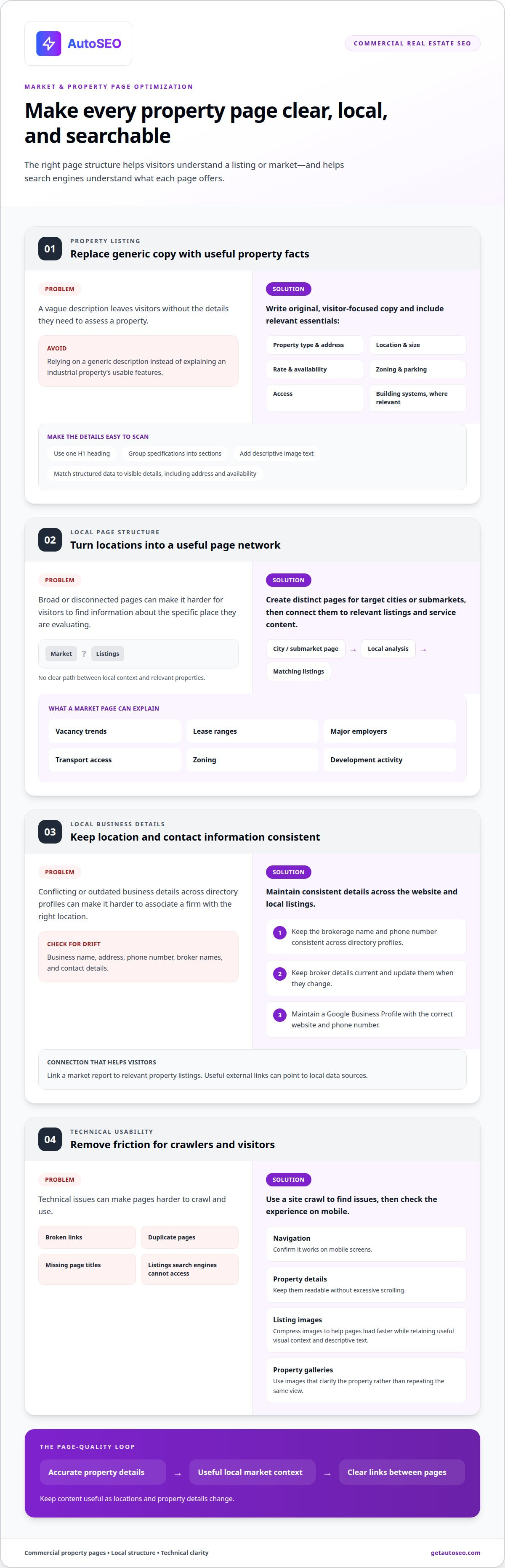
A strong listing page presents a property’s essential facts in original, visitor-focused copy. Include the property type, address, location, size, rate, availability, zoning, parking, access, and building systems where relevant. For example, an industrial listing should explain its usable features, not rely on a generic description. Use one H1 heading, then organize specifications into scannable sections. Add descriptive image text, and keep structured data consistent with visible details such as address and availability.
Local Website Structure
A local SEO structure organizes listings and market information around the places an audience is evaluating. Create distinct pages for target cities or submarkets, then connect them to relevant property listings and service content. A market page can explain vacancy trends, lease ranges, major employers, transport access, zoning, and development activity. For local visibility, maintain a Google Business Profile with the correct website and phone number, keep broker details current, and use consistent business name, address, and phone information across directory profiles.
Common Technical SEO Issues
Technical issues can make pages harder for search engines to crawl and visitors to use. A site crawl can uncover broken links, duplicate pages, missing page titles, and listing pages that search engines cannot access. Check that navigation works on mobile screens and property details are readable without excessive scrolling. Compress listing images to help pages load faster, while retaining useful visual context and descriptive text. For example, a warehouse gallery should clarify the property rather than repeat the same image.
Use market pages to add local analysis, and connect each one to matching listings. A consistent SEO publishing workflow can help maintain useful content as locations and property details change.
Commercial real estate citations and backlinks
Citations help search engines connect a commercial real estate business with its location and services. Backlinks create pathways from other sites and can support a page’s authority.
Commercial Real Estate Citations
A citation is an online business listing that identifies a firm, often with its name, address, and phone number. Consistent details across directory profiles help search engines associate the business with the right location. Keep the brokerage’s name and phone number consistent across its website and local listings, and update broker names and contact details when they change. Internal links can guide visitors from a market report to relevant property listings, while useful external links can point to local data sources.
Backlink Quality and Link Building
A backlink is a link from another website to a page on your site. Relevant links from reputable websites can support authority and attract referral traffic. Prioritize industry coverage earned through expert commentary, original market data, charts, or case studies. For example, a broker’s analysis of a submarket could interest a business publication. Avoid pursuing links for volume alone: a link from a trusted industry source is more relevant than one from an unrelated listing site.
Track organic traffic, ranking changes, and new backlinks together. If a market report attracts links but its related listing pages receive little traffic, strengthen the internal links between them and review whether the pages are useful to visitors.
Backlinks and Authority
Backlinks can signal that other websites consider a page useful, but authority grows through relevance and credibility, not link counts alone. One industry study described backlinks as the number-one contributing factor to high real estate rankings, but that finding does not make any individual link a ranking guarantee. Build a connected resource: publish a detailed market analysis, link it to matching listings, and offer it to relevant industry outlets. This gives readers a reason to visit and publishers a substantive resource to reference.
SEO fundamentals and benefits for commercial real estate
A strong SEO strategy connects technical access, useful information, and clear business goals. For a commercial real estate firm, visibility matters when investors, tenants, or buyers need property or market information. The practical aim is to attract relevant organic traffic to pages that answer those needs.
Start with the site’s foundations. Search engines need to crawl and understand important pages, while visitors need clear navigation and readable content. A technical SEO audit can include a site crawl to uncover issues that block discovery. Connect the findings to business priorities: an industrial brokerage might focus on warehouse listings, local market analysis, and investor questions instead of broad, unrelated content.
Useful content gives the strategy a reason to keep working. Commercial real estate markets change, and listing details, local conditions, and search interests shift with them. Update pages when information changes, and add market analysis that helps readers assess a location. A market report can include an executive summary, submarket breakdowns, broker commentary, practical advice, and links to relevant listings. Three to five clear charts or tables can make market data easier to interpret.
Measure progress with outcomes tied to the business. Track organic visits to market pages and listings, changes in search visibility, and actions such as inquiries or contact requests. If traffic rises but relevant actions don’t, review whether the page answers the visitor’s intent and makes the next step clear. Outbrain reports that organic search drives 300% more traffic than social media, but traffic quality still depends on the page and audience.
SEO is a long-term strategy. Consistent work can start showing results within 6-12 months, as technical improvements and useful content build search visibility over time. To keep that work moving, start building consistent SEO content for the markets and properties you want to reach.
AutoSEO
AutoSEO is a natural next step when your commercial real estate SEO needs consistent content and backlink activity. Its automated platform subscription publishes 30 SEO-optimized articles per month and builds backlinks with 100 Domain Authority worth of backlinks. This ongoing activity can support a broader strategy for building visibility around relevant property types and markets. It doesn’t replace accurate listing information, useful market pages, or a technically sound website, so those fundamentals still matter. If you want to put recurring SEO publishing on autopilot, contact AutoSEO to discuss whether the platform fits your approach.
Turn Search Visibility Into Your Next Growth Priority
Make the next phase of your SEO strategy a deliberate business decision. Choose the market or property type that matters most, then define what a qualified visitor should do after landing on its page. That focus keeps content, site improvements, and performance reviews aligned with commercial goals.
For teams investing in SEO for commercial real estate, the useful question is not simply whether traffic is rising. Consider whether the right audience is finding relevant pages and taking meaningful next steps. Use those signals to refine priorities over time instead of treating search visibility as a one-time project.
If you’re ready to build a consistent process around that work, contact AutoSEO about your SEO. Set a clear direction, keep improving, and give your market strategy room to grow.
Frequently Asked Questions
What is SEO?
SEO is the work of improving how a website appears in unpaid search results. It helps search engines discover, interpret, and present relevant pages to people looking for information or services. For example, a clearly organized page about office leasing can help search engines understand its subject. SEO also improves the visitor experience by making useful information easier to find.
What is SEO for commercial real estate?
SEO for commercial real estate helps buyers, tenants, investors, and property owners find relevant firm pages through search. It connects search intent with content about specific assets, services, and markets. A property manager could publish a page answering common questions about managing a particular building type, while a brokerage could create resources for investors evaluating local opportunities. The goal is relevance, not traffic without purpose.
Which keywords should commercial real estate companies target?
Target phrases that reflect your audience, property focus, and service area. An industrial brokerage might prioritize searches about industrial leasing, while an investment firm may target phrases about a specific asset class or market outlook. Also consider questions prospects ask before contacting you. Grouping terms by audience and intent helps assign each topic to a useful page instead of forcing unrelated phrases together.
How do you optimize commercial property listings for SEO?
Give each listing a distinct page with a clear purpose and accurate, current information. Write original copy explaining why the property may matter to its likely audience, rather than reusing a template across listings. Use a descriptive page title and heading, and make the next step clear, such as viewing leasing details or contacting the listing broker. Update or remove pages when a property’s status changes.
How can Google Business Profile improve commercial real estate SEO?
A complete Google Business Profile can help a firm appear in Google Maps and local search results. Select a category that matches the business, such as Commercial Real Estate Agency or Property Management Company, and keep the website and phone details current. Reviews can also give prospective clients insight into the firm’s service. For a brokerage with several offices, keep each profile’s location information accurate.
What local SEO strategies work for commercial real estate brokers and property managers?
Create useful pages for the cities and submarkets the firm serves, including nearby communities when they matter to clients. Brokers can explain local property trends, while property managers can address building operations and tenant needs in those areas. Keep contact details consistent across directory listings, and encourage genuine customer reviews. Location-specific context helps searchers find the right team for their needs.


