

Cybersecurity buyers don’t discover vendors through rankings alone. SEO for cybersecurity companies means matching technical and commercial search intent with useful, credible pages, then making those pages easy for search engines and AI systems to understand.
That takes more than publishing broad security advice on a regular schedule. Buyers need clear answers at different stages, from understanding a threat to comparing solutions. Technical experts and business decision-makers may also need very different details. Strong SEO fundamentals connect these needs to content that can earn visibility in traditional search and AI-generated results.
This guide breaks the process into practical steps. You’ll learn to group keywords by intent, find specific long-tail opportunities, and strengthen the technical and content foundations that support discoverability. It also explains how evergreen, expert-led resources can help buyers find and understand your company as they research security challenges and evaluate options. The goal is a focused SEO approach that builds quality and reach without losing sight of the people behind each search.
Key Takeaways
- Build evergreen resources around security threats, compliance topics, and solution comparisons to address distinct buyer questions.
- Group keywords by commercial, technical, and informational intent so each page serves a clear search need.
- Use specific long-tail queries to reach buyers researching focused security challenges and industry needs.
- Support discoverability with mobile-friendly pages, clear site structure, internal links, and credible expert authorship.
1. 03Can SEO help my cybersecurity company appear in AI search results?
Yes. Search-focused content can help cybersecurity brands appear in AI search results. Build pages around topics such as vulnerability management, identity security, cloud posture, and security operations maturity. Add resources on NIST CSF alignment, zero-trust implementation roadmaps, and MDR-versus-XDR decisions. These focused explanations give search systems clear information to interpret and reference.
Address both technical experts and business decision-makers. For example, pair a technical guide to vulnerability management with an executive overview of business risks and response priorities. Credit qualified practitioners, such as security researchers or CISOs, as authors. Cite primary resources like MITRE ATT&CK and CVE records. These steps make each page more useful to its audience and help establish its authority.
Build evergreen content pillars, then add timely coverage when emerging threats change buyers’ questions. A cloud security pillar might connect explainers on cloud posture, identity security, and incident response. When a major vulnerability emerges, publish accurate CVE coverage promptly and link it to relevant evergreen guidance. Keep threat information precise, dated, and useful to technical readers.
Thought leadership can build awareness, while bottom-of-funnel content helps buyers evaluate solutions. Publish case studies, white papers, and comparison pages that explain differences between security approaches. SEO supports discoverability through lasting content; PPC can provide paid exposure while campaigns are running. Use each according to your goals, and connect educational content to clear evaluation resources.
Local SEO can help firms with localized services reach nearby business clients. Use geographic keywords and keep your Google Business Profile up to date so local searchers can find relevant service information. For compliance content, explain the frameworks and buyer concerns your solutions address. The European Union and California Legislature identify the GDPR and CCPA as privacy laws; non-compliance can lead to fines and damage trust.
Avoid thin or duplicated pages, keyword stuffing, and unsupported security claims. These tactics undermine the authority a cybersecurity audience expects. Protect the site itself, too: search engines may lower rankings when a website is compromised or considered unsafe. Review technical pages, author credentials, and threat updates before publication. Accurate content and a secure site give search systems stronger signals to assess.
2. Keyword research by commercial, technical, and informational intent
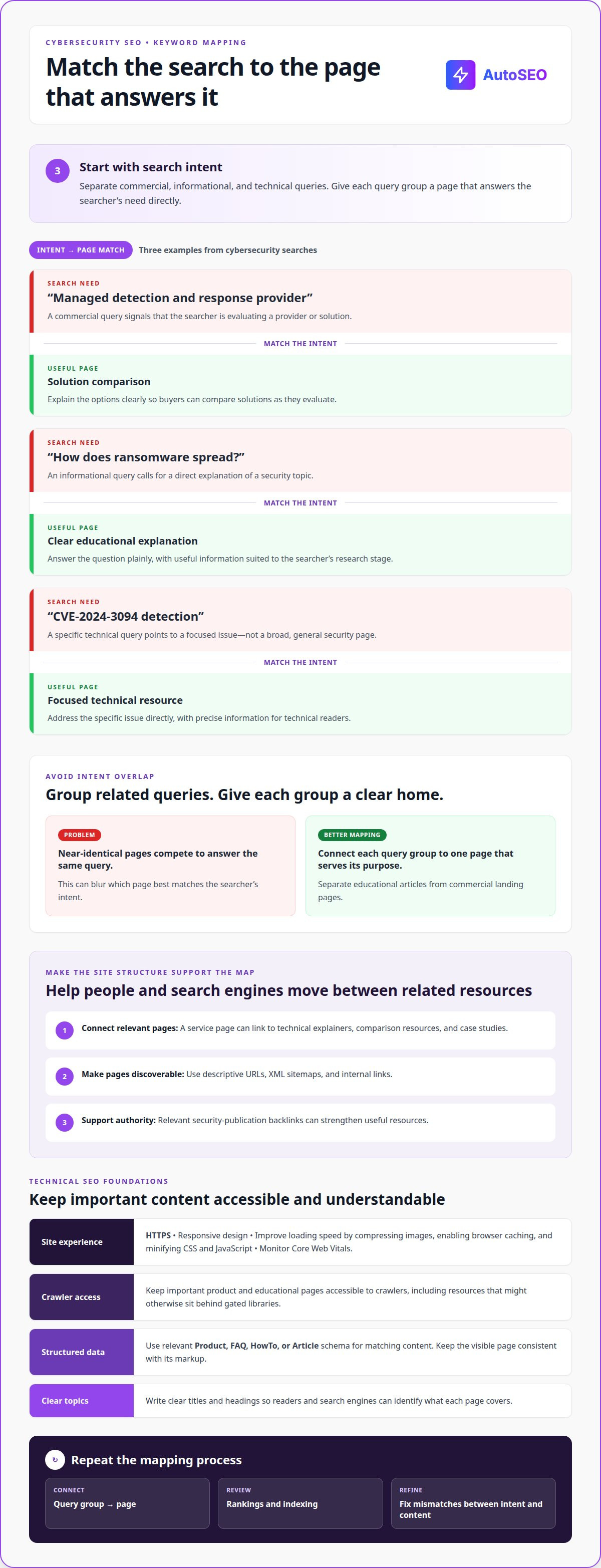
Start keyword research by separating what the searcher wants to do. A practical SEO for cybersecurity companies strategy maps commercial queries, such as “managed detection and response provider,” to solution comparisons. Informational searches, like “how does ransomware spread?”, need clear explanations. Technical queries may focus on a specific issue, such as CVE-2024-3094 detection. Match each intent to a page that answers it directly.
Which keywords should cybersecurity companies target for SEO? Choose relevant commercial, technical, and informational terms tied to your solutions and buyers’ questions. Prioritize searches your content can answer precisely. Group related queries by intent instead of creating competing pages for nearly identical phrases.
Use your keyword research to shape site architecture. A service page can link to technical explainers, comparison resources, and relevant case studies, helping visitors move from research to evaluation. Descriptive URLs, XML sitemaps, and internal links also help search engines discover and understand pages. Backlinks from relevant security publications can strengthen the authority of useful resources.
Technical SEO supports that structure. Secure the site with HTTPS, use responsive design, and improve loading speed by compressing images, enabling browser caching, and minifying CSS and JavaScript. Monitor Core Web Vitals to spot performance issues that affect page experience. Keep important product and educational pages accessible to crawlers, including resources that might otherwise sit behind gated libraries.
Structured data can clarify a page’s subject. Use relevant Product, FAQ, HowTo, or Article schema for matching content, and keep the visible page consistent with its markup. Write clear titles and headings so readers and search engines can identify each page’s topic. Technical optimization helps strong content become easier to find and interpret.
For SEO for cybersecurity companies, make keyword mapping a repeatable process: connect each query group to a page, review rankings and indexing, then refine mismatches between intent and content. For an automated approach to ongoing SEO work, explore SEO content workflows.
3. Commercial, informational, compliance, and long-tail keywords
Cybersecurity purchases can involve evaluation cycles that stretch across months, so build a full-funnel keyword map. Start with threat-awareness searches, such as “signs of a compromised account.” Then address solution research, like “identity security platform features,” and vendor evaluation, such as “managed security provider comparison.” Create a page for each stage that helps buyers make a useful next decision.
Map search intent to buyer personas before choosing target terms. A security engineer may search for implementation details, while a business leader may want to understand risk and cost. Use a spreadsheet to group keywords by persona, funnel stage, and page type. This separates educational articles from commercial landing pages and helps prevent multiple pages from competing to answer the same query.
Long-tail phrases often reveal a specific need. Filter for queries of three or more words and question-based searches, then assess whether your content can answer them precisely. Examples include “ransomware protection for healthcare providers” and “how to assess cloud security posture.” These specific searches may be less competitive and can attract people with a clearly defined challenge.
Compliance searches need clear, carefully scoped content. Build pages around frameworks such as ISO 27001, explaining relevant terminology and how a security solution supports a buyer’s evaluation. Pair those resources with commercial queries like “ISO 27001 compliance software” only when the page accurately describes the offering. Avoid implying certification or guaranteed compliance. Match the phrase to the page’s actual content.
Review the keyword map as your SEO strategy evolves. If an informational page attracts visitors who need implementation guidance, add an internal link to a relevant, more detailed resource. If a commercial page attracts the wrong audience, refine its wording and intent. Ongoing optimization connects organic discovery to real buyer needs without turning every search into a sales pitch.
4. SEO fundamentals for cybersecurity businesses
What SEO strategies work best for cybersecurity companies? Combine useful expert content with sound site structure, strong mobile performance, and ongoing measurement. Track organic traffic, visibility for target pages, and qualified actions such as demo requests to see whether your optimization attracts the right audience.
Build topic clusters that connect a main service page with focused supporting resources. Cybersecurity SEO guidance recommends 8 to 15 supporting articles per cluster. For example, a threat-detection hub could connect explainers about alert triage, incident response, and detection workflows. Use clear H1, H2, and H3 headings so readers can scan each page and search engines can understand its structure.
Make credibility visible on high-stakes security pages. Name the practitioner who wrote or reviewed each technical explanation, and display relevant credentials alongside the content. Cite primary records when discussing a vulnerability, then update the page when its detection guidance changes. A clear publication or update date helps readers assess whether threat information remains useful.
Mobile experience affects whether busy buyers can use the site during research. Use responsive layouts and keep important service details readable on smaller screens. Aim for a Largest Contentful Paint below 2 seconds, as recommended in the SEO guidance. Compress large images and remove unnecessary scripts when they slow key pages.
Keep crawl paths clear across product pages and resource libraries. Use XML sitemaps and descriptive internal links to help search engines discover priority content. Review indexing and broken links after significant site changes. For cybersecurity firms, site security also supports trust: HTTPS protects user data, while a compromised or unsafe site can lose rankings and organic visibility.
Put these fundamentals into a regular publishing and maintenance workflow. Build a consistent SEO publishing workflow to keep useful content moving while your team focuses on security expertise.
AutoSEO
AutoSEO is a natural next step when your cybersecurity team needs a consistent publishing workflow. Its Automated SEO Platform Subscription publishes 30 SEO-optimized articles per month and builds backlinks worth 100 Domain Authority, supporting ongoing search visibility while your specialists focus on security expertise.
Use AutoSEO to scale content around your services, buyers’ questions, and technical topics without managing every publishing task manually. The platform publishes one expert SEO article daily, helping you build a consistent body of content that search engines can understand and connect with relevant searches. It also supports visibility in Google and AI search engines.
Contact AutoSEO to explore its automated SEO platform and start building a consistent publishing routine.
Turn search visibility into a growth habit
Make search a durable part of how your cybersecurity business communicates its expertise. Treat each new buyer question as a chance to clarify your perspective, strengthen a relevant page, or address a useful content gap. Over time, this discipline can help your team build a more recognizable presence where buyers research.
Effective SEO for cybersecurity companies connects technical knowledge with clear business value. Keep that connection visible in your publishing decisions, and use performance insights to decide what deserves attention next. This creates a focused process for turning specialized knowledge into content buyers can find and use.
AutoSEO can support teams that want to make ongoing SEO work more manageable. Contact AutoSEO to discuss your SEO and explore whether its platform fits your goals. Your expertise is the foundation. A consistent process can help more of the right people discover it.
Frequently Asked Questions
What Is Cybersecurity SEO?
Cybersecurity SEO makes a security company’s useful pages easier to find through organic search. It connects buyer questions with accurate pages about services, risks, and technical issues. For example, a provider can create a focused page explaining how its incident response service works, then link it to related guidance and clear next steps.
What is SEO, and why does it matter now?
SEO helps search engines discover, interpret, and present website pages. It matters because buyers may research a security problem before speaking with a vendor. A well-structured page about incident response, for example, can help a potential buyer understand the service and decide whether it fits their needs. Organic visibility also gives a company a lasting way to reach relevant audiences.
03Can SEO help my cybersecurity company appear in AI search results?
Yes, clear and accessible pages give AI search systems useful material to interpret. Make each page answer a focused question, identify its subject clearly, and connect related concepts with descriptive internal links. For example, an incident response page can explain the service, define relevant terms, and link to a separate explanation of response processes. Clear evidence and consistent terminology make information easier to understand.
04What kind of content works best for cybersecurity SEO?
Content works best when it solves a specific problem for a defined reader. A security leader may need an incident-response planning checklist, while an engineer may need a configuration walkthrough. A glossary can clarify technical terms for new buyers, and a comparison page can explain meaningful differences between approaches. Keep each resource focused, accurate, and connected to a relevant service or next step.
06How do you measure the success of a cybersecurity SEO programme?
Measure whether organic search contributes to qualified demand, not just visits. Track engagement on relevant landing pages, inquiry quality, demo requests, and conversions that began or were assisted by organic discovery. Compare these outcomes with rankings for target topics and changes in search visibility. Buyers may read several resources before converting, so review their journey across touchpoints instead of crediting only the final click.
How do credibility, E-E-A-T, and digital PR reinforce search authority?
Credibility grows when security claims are attributable, verifiable, and grounded in experience. Identify authors and reviewers, explain their relevant expertise, and cite primary sources for technical claims. Digital PR can extend that evidence beyond your site through expert commentary, original research, and contributions to relevant industry publications. Consistent mentions across credible sources help buyers assess your expertise and understand your role in the security field.


