
Creating a page for every nearby city can add clutter without improving visibility. For SEO for event planning businesses, build a city page only for a location you genuinely serve and can cover with useful, distinct information. If each page would repeat the same services, venues, and details, strengthen one local service page instead.
City pages can seem like a shortcut: they add location terms to your site and may match how people search for planners. But SEO for your business and promotion for a specific event serve different goals, so each needs its own content. This guide explains how to choose the right approach.
Learn how to shape event pages around useful details, optimize your Google Business Profile, and research keywords for services, event types, and locations. You’ll also learn how to distinguish lasting visibility for your planning business from time-sensitive promotion for a single event, so your SEO work supports the right outcome.
Key Takeaways
- Create a city page only when it can offer genuinely useful, location-specific information; otherwise, improve a broader service page.
- Make event pages practical for attendees with clear details, schedules, location information, and answers to common questions.
- Keep your Google Business Profile accurate and use it to reinforce local visibility with relevant updates and customer feedback.
- Separate ongoing visibility for your planning services from promotion of a single event, then choose keywords and pages to match each goal.
1. Event-page titles, meta descriptions, URLs, and content
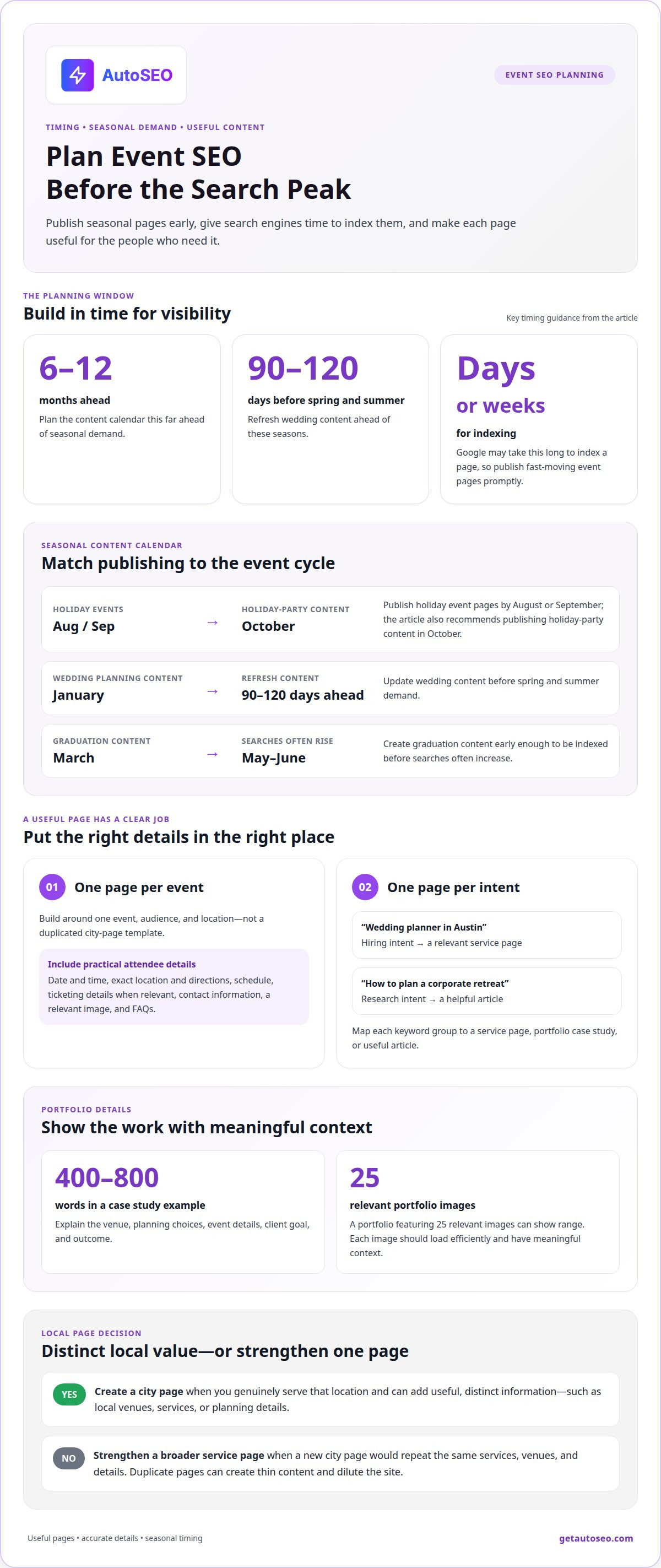
Build each page around one event, audience, and location rather than duplicating a template across cities. For example, a planner serving Austin should create a page only when it can include specific Austin venues, services, or planning details. That gives visitors a reason to stay and helps search engines understand the page’s focus. City pages without distinct information can create thin content and dilute your site rather than attract useful traffic.
Write a title that names the event type and location, such as “Austin Wedding Planning for Outdoor Celebrations.” Use the meta description to tell visitors what they’ll find, such as venue expertise, planning support, or an event schedule. Keep the URL short and readable, with the service or event and location clearly stated. Before publishing, check that the title, description, URL, and page content match the same search intent.
Make the page useful beyond its search terms. Include the event date and time, exact location and directions, schedule, ticketing details when relevant, contact information, a relevant image, and an FAQ. Add speaker profiles or venue details when they help attendees decide. A blog post can answer a practical question, such as how to plan a graduation celebration. A short video can show a venue layout or explain the event format, but keep the essential details in writing too.
Plan content around demand, not the day an event goes live. Publish holiday-party content in October, wedding-planning content in January, and graduation content in March. Graduation searches often rise in May–June, while holiday event pages should be published by August or September. Plan the calendar 6–12 months ahead, then refresh wedding content 90–120 days before spring and summer. This gives pages time to be indexed before seasonal traffic peaks.
For a fast-moving local event, publish a complete landing page as soon as the key details are ready. Google may take days or weeks to index a page, so publishing promptly matters. Add confirmed updates to the page instead of scattering changes across posts. Track organic traffic and conversions, then update details that affect visitors’ decisions.
2. Google Business Profile optimization
Keep your Google Business Profile accurate so local searchers see consistent business details. Use the correct business name, address, phone number, and hours, then add relevant photos and event updates. A venue should show its actual location; a wedding planner should clearly describe services and areas served. For physical events, include the venue address, date, photos, and contact information where relevant.
Reviews help prospective clients assess an event business before getting in touch. Invite satisfied clients or attendees to leave honest feedback on your profile, and respond professionally. Don’t offer incentives for positive ratings or post fabricated feedback. Before peak demand, use profile posts and social updates to share timely information, such as seasonal services or an upcoming event.
How should an event planning website be structured and optimized for search engines? Organize it around clear service pages, event types, locations genuinely served, and a portfolio. Audit crawlability, mobile performance, image optimization, and indexing, then make each page’s headings and copy fit its purpose. Compress portfolio photos, use descriptive file names and alt text, and ensure pages work well across devices.
Build portfolio case studies around a specific project, client goal, and outcome. A useful example can include 400–800 words explaining the venue, planning choices, and event details, supported by a curated photo gallery. A portfolio featuring 25 relevant images can show range, but every image should load efficiently and have meaningful context.
How can event planners earn backlinks and local citations? Create useful venue features, collaborate with vendors, and share real-event stories with relevant local publications and industry associations. Keep your business details consistent wherever your business is mentioned.
How important are reviews for event planner SEO, and how can businesses get more? Reviews offer first-hand feedback that helps people compare planners. Ask satisfied clients for honest feedback and reply constructively.
What SEO mistakes and Google policy risks should event planning businesses avoid? Avoid duplicate city pages, misleading business details, and fake reviews. Instead, publish accurate, distinct information about your services.
How much does SEO cost for event planning businesses in the United States? The cost depends on the work involved and is provided after a quote request. Factors include the scope of work, website needs, and publishing requirements.
For a consistent publishing workflow, explore an automated SEO content workflow.
3. How Do You Do Keyword Research for Event Planners?
Start with the services you offer, the event types you plan, and the locations you genuinely serve. Group keywords by intent: “wedding planner in Austin” signals hiring intent, while “how to plan a corporate retreat” suggests research. These searches need different pages and calls to action. Venue style matters too: a rustic barn and a downtown ballroom appeal to different audiences and search language.
Use Google search results to see how people phrase their needs and what kinds of pages appear. Note local terms that reflect real client decisions, including venue style, event size, and planning services. Then map each keyword group to a relevant service page, portfolio case study, or helpful article. This keeps pages focused and helps search engines connect content with its intended audience.
Separate ongoing business visibility from promotion for a single event. A planner can target “corporate event planner in Denver” for sustained local SEO, while an event page targets its name, date, venue, and audience. Track rankings and qualified enquiries according to each page’s purpose, not just broad keyword position. If an event is time-sensitive, paid ads can provide faster promotion while Google may take days or weeks to index its page.
Match marketing content to the audience’s actual questions. A couple comparing venues may want planning advice, while a company organizing a conference needs logistics and scheduling expertise. Use client questions and first-hand project experience to create useful answers, rather than repeating generic keyword variations. By early 2026, Firmly Rooted Events had booked multiple clients who said they discovered the business through AI search tools.
Review your keyword map as services and local demand change. Keep terms that attract relevant visitors, revise pages that draw the wrong audience, and add content when a real audience need remains unanswered. Strong visibility starts with matching a specific search to a useful page, then measuring whether the visit leads to an enquiry or another meaningful action.
4. Differences between business SEO and event promotion
Business SEO builds lasting visibility for your planning services; event promotion fills a specific event. That distinction changes the target, page, and measure of success. A wedding planner’s service page should connect with couples seeking planning support. A ticket page should answer visitors’ questions about one concert, its venue and date, and its intended audience.
For business SEO, organize content around the services, event types, and locations you genuinely serve. A corporate planner might target companies seeking conference planning in Denver, then show relevant experience and provide a clear way to enquire. Measure qualified enquiries and organic traffic to those service pages. Over time, useful pages reinforce what your business does and whom it serves.
Event promotion has a shorter runway and a narrower conversion goal. Its page should make the event’s value clear and guide visitors toward registration or ticket purchase. Promote the event name, venue, schedule, and intended audience through channels suited to its launch. An email calendar can coordinate subject lines, campaign messages, calls to action, and a final reminder. Track registrations, ticket sales, check-ins, and social engagement against the event’s goals.
Keep the two efforts connected, but don’t confuse their results. A spike in event registrations doesn’t prove that service pages attract planning clients. Likewise, more business enquiries don’t show whether a particular event campaign converted attendees. Use separate landing pages and reporting groups. After the event, preserve useful material as a case study and link it to the relevant service page. This lets the event support future visibility without suggesting its temporary offer is still available.
Choose the strategy by asking what the visitor needs next: a planner for future work, or details and registration for a specific event. For a repeatable approach to publishing supporting business content, streamline your SEO content workflow.
AutoSEO: Automated SEO Platform Subscription
AutoSEO’s Automated SEO Platform Subscription supports event businesses that need a consistent content workflow beyond promoting a single event. It publishes 30 SEO-optimized articles per month and builds backlinks, helping maintain ongoing visibility for services, event types, and locations. Use it when creating and publishing useful content regularly competes with client work. The platform automates the publishing process, so you can focus on making each page reflect your expertise and the audiences you serve. It’s a fit for businesses seeking ongoing SEO activity, not a replacement for event-specific promotion, accurate business details, or first-hand expertise. Visit getautoseo.com to learn more.
Make Your Next SEO Move Count
Choose one growth priority before adding more pages. You might focus on reaching couples seeking a wedding planner, attracting corporate event enquiries, or building recognition around a venue style. Give that priority a clear page and a meaningful measure, such as relevant enquiries. This keeps SEO focused on business outcomes rather than page volume.
Then review what visitors do after arriving. If a page attracts the right audience but few enquiries, improve the next step. If it attracts the wrong audience, revisit its topic and intent. This practical cycle gives SEO for event planning businesses a clearer direction and helps each update earn its place.
For ongoing publishing support, explore how AutoSEO fits your workflow and decide whether its subscription suits your priorities. Explore SEO support with AutoSEO and take the next step with a clear growth target. Consistent, focused execution can make your expertise easier for the right clients to find.
Frequently Asked Questions
Do I need a separate page for every city?
No. Create a city page only when you can make it genuinely useful to people in that location. For example, a planner serving Austin could describe local venue experience, travel logistics, and services relevant to Austin clients. If you’d only change the city name and leave everything else untouched, improve your main service page instead. Thin, repetitive pages give visitors little reason to choose your business.
How Do You Do Keyword Research for Event Planners?
Start with the words a likely client would use to describe their event, need, and location. A company planning a conference might search for corporate event support, while a couple might seek a wedding planner for a particular style. Review actual enquiries and client questions to find natural phrasing. Group terms by intent, then assign each group to a page that addresses that need instead of forcing every phrase onto one page.
How Do You Rank in Local Search?
Keep your business details consistent across your website and local listings, and your Google Business Profile up to date. Clearly describe the areas you serve, then show relevant work that demonstrates local knowledge, such as a case study featuring a familiar venue. Ask satisfied clients for honest reviews and respond professionally. These steps help people assess your business and help search engines connect your services with local searches.
How Do You Track Rankings and Leads?
Track keyword positions alongside organic visits and enquiries instead of treating rankings as the final result. Separate service-page leads from event registrations to see which activity produced each conversion. For example, record whether an enquiry came through a wedding service page or a specific event landing page. Review the same measures over time and improve pages that attract visitors without generating relevant enquiries.
How Long Does SEO Take?
SEO rankings, qualified traffic, and enquiries are typically measured over several months. Search engines need time to find and assess pages, while useful content and relevant links build visibility gradually. Start with your highest-priority service pages and tracking foundations, then expand as you learn which topics attract the right prospects. For a time-sensitive event, search visibility may not arrive soon enough to replace direct promotion.
How Should You Optimise Service Pages?
Give each service page one clear purpose and make its next step obvious. For example, a wedding planning page can explain the support you offer, the celebrations you plan, and what information a couple should provide in an enquiry. Add original examples that demonstrate your approach. Keep headings specific, use accessible language, and make sure the page works smoothly on mobile devices.


